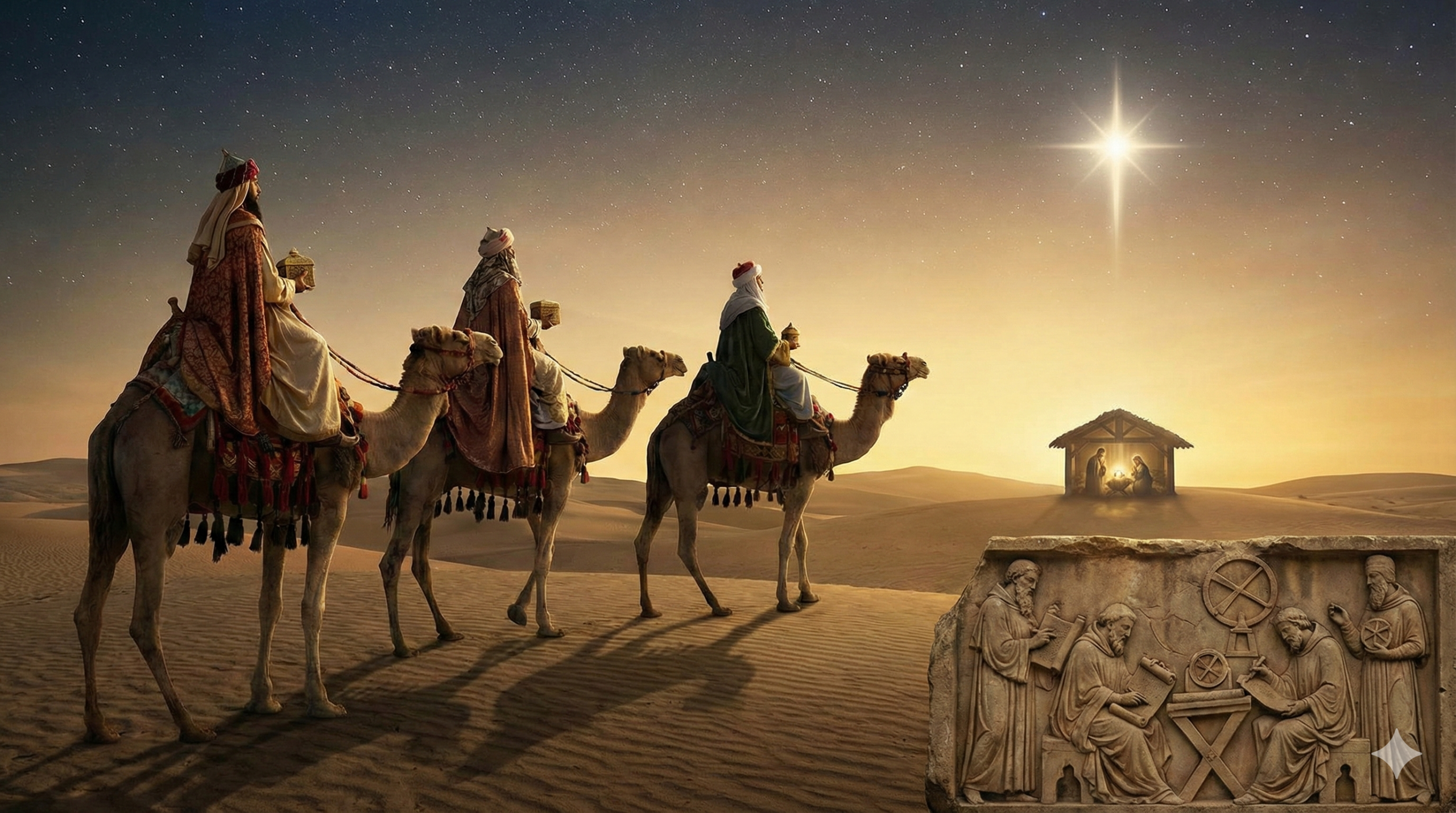
The Magi: From Ancient Priests to Christmas Kings (and the Real Story Behind “Magic”)
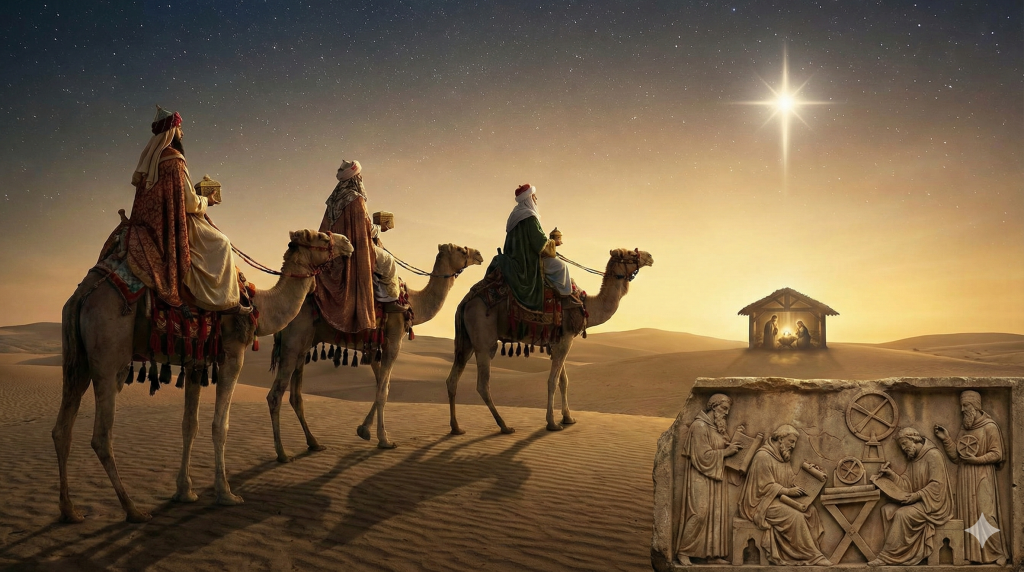
Hey, let’s talk about something that’s been quietly fascinating me every Christmas season—the Magi. You know, those “Three Wise Men” who show up in nativity scenes with their camels, crowns, and fancy gifts? Turns out, there’s a wild, millennia-spanning backstory to who they really were, where the word “Magi” comes from, and why it basically invented the word “magic” while also becoming a symbol of holy wisdom. It’s one of those historical twists that makes you go, “Wait, really?”
Most of us grew up hearing the Bible story in Matthew: mysterious guys from the East follow a star, find baby Jesus, and bring gold, frankincense, and myrrh. We picture three kings named Melchior, Caspar, and Balthazar—one old, one middle-aged, one young; one from each continent. Cute, right? But the original Greek text just calls them “magoi”—the Magi. English Bibles softened it to “Wise Men” because, well, “Magi” had some baggage by then. In reality, these weren’t random wise dudes or kings (at least not in the Bible). They were high-level members of ancient occult priestly orders—mystic adepts, custodians of secret knowledge, basically wonder-workers. And yeah, our word “magic” comes straight from them.
The journey of the word “Magi” is like a rollercoaster. It starts out super respectable, takes a dark turn into “sorcery” territory, gets redeemed in the Christmas story, and ends up as saintly kings in medieval folklore. Let’s break it down phase by phase, because it’s honestly pretty cool.
Phase 1: The Original Magi – Respected Priests of Ancient Iran
Way back in ancient Persia (think Median and Persian Empire days), the Magi weren’t just any priests—they were a specific hereditary tribe. The word comes from Old Persian “magu-” and Avestan “magâunô.” These guys were the official religious elite for Zoroastrianism and earlier Iranian faiths.
Picture this: No royal ceremony or sacrifice happened without them. They interpreted dreams for kings, educated princes, poured ritual libations, and even guarded royal tombs (like Cyrus the Great’s). They were the go-to experts on sacred knowledge, astrology, and rituals. In their home turf, being called a Magus was a huge honor—like being a Harvard professor and Supreme Court justice rolled into one. Total respect.
Phase 2: The Greek Glow-Up (or Glow-Down) – Hello, “Magic”
Things got complicated when the term traveled west to the Greeks. They turned it into “mágos,” and suddenly the vibe shifted. Some writers, like Xenophon, still respected them as legit religious authorities. But a lot of others? Not so much. The Greeks started linking the Magi (and their founder Zoroaster) to astrology, occult arts, and what they saw as sketchy rites.
By the 5th century BC, the word spawned “mageia”—which we know as “magic.” At first, it just meant ritual stuff, but it quickly slid into the idea of manipulating nature with supernatural tricks. Boom—negative connotations kicked in. People started using “magos” like we might say “charlatan” or “con artist.” Roman writers like Pliny the Elder straight-up called their craft a “monstrous madness” that tricked even philosophers.
This darker view carried into the New Testament too. Outside of Matthew’s Gospel, “magos” usually gets translated as “sorcerer”—think Simon Magus in Acts 8, the guy trying to buy spiritual power. So yeah, by Greco-Roman times, Magi = shady magician in most people’s minds.
Phase 3: The Biblical Plot Twist – From Sorcerers to Holy Star-Followers
Then comes the Gospel of Matthew, and everything flips. These “magoi from the East” show up, follow a star, worship baby Jesus, and bring epic gifts. Suddenly, the term gets rehabilitated—at least for these particular guys.
Matthew doesn’t call them kings, doesn’t say there were three, and definitely doesn’t name them. They’re just distinguished foreigners who recognize Jesus’ divinity through their star-gazing skills. Early Christians leaned into Old Testament prophecies (like kings from afar bringing gifts in Psalms and Isaiah) and started reimagining them as royal figures. By around 500 AD, the “Wise Men” had become full-on kings in art and tradition.
Church fathers like Tertullian and Ignatius worked hard to separate the Magi’s “good” astrology (which led them to Christ) from the “bad” demonic kind the Church condemned. Their argument? The Star of Bethlehem basically ended fateful astrology—the Magi saw the truth, bowed to Jesus, and their old arts became obsolete.
Phase 4: Medieval Makeover – Names, Races, and Sainthood
Fast-forward to the Middle Ages, and the Magi get a massive glow-up in folklore. They finally get names: Melchior (old guy from Europe/Asia), Caspar (middle-aged), and Balthazar (young, often depicted as African). This represented the three ages of man and, later, the three known continents—Europe, Asia, Africa. It was a way to show the whole world coming to worship Jesus.
Their gifts got deep symbolic meanings (more on that in a sec), and they even became saints and martyrs. Legend says their relics bounced from Constantinople to Milan, then to Cologne Cathedral in 1162, where they’re supposedly still chilling today.
Different Cultures, Different Takes
Not everyone bought the heroic version. In Jewish Talmudic texts, Magi stay sorcerers who mess with Jewish practices. In Islam, “Majus” specifically means Zoroastrians—a recognized religious group, but distinct from Christians/Jews. Sometimes it’s even been used as a slur against Iranians. And in some apocryphal Christian texts, like the Revelation of the Magi, they’re reimagined as mystics from a mythical land (maybe China), descendants of Adam’s son Seth. Wild variations.
The whole thing reminds me of the word “hacker.” Originally, it just meant clever tech folks solving problems creatively—respectable, like the original Magi priests. Then the media turned it into “evil computer criminal.” But in some stories, hackers are the heroes who expose truth. Same with Magi: one branch becomes “dark magic,” the other becomes the saintly Wise Men.
Okay, But What About Those Gifts?
No discussion of the Magi is complete without the gold, frankincense, and myrrh. These aren’t random—they’re loaded with meaning, both practical and prophetic.
The classic Christian take (going back to guys like Origen and Irenaeus) is that they reveal Jesus’ triple identity:
- Gold: For a king. It’s the tribute you’d give a monarch, symbolizing Jesus as “King of the Jews” with an eternal kingdom.
- Frankincense: For a god. This incense was burned in temples—smoke rising like prayers to heaven. It honors Jesus’ divinity and his role as High Priest.
- Myrrh: For a sacrifice. This bitter resin was used for embalming. Super foreshadowing—Jesus would suffer and die. (Fun fact: At the crucifixion, they offer him wine mixed with myrrh as a painkiller, and it’s used to prepare his body for burial. Full circle.)
Some traditions add layers. Marco Polo claimed the gifts were a test: child accepts gold = earthly king, frankincense = god, myrrh = healer/physician. Jesus takes all three—boom, he’s all of the above.
Esoterically, some say gold = power over the material world, frankincense = spiritual realm, myrrh = mastery over death. Others point out protective properties—frankincense and myrrh could ward off evil or purify the space.
But let’s ground it: These were standard high-value tribute items in the ancient Near East. A king in 288 BC gave the exact same combo to Apollo’s temple. Frankincense and myrrh came from Arabia, so if the Magi were from that region (maybe Nabatea), it makes sense. Modern science backs the medicinal angle too—frankincense reduces inflammation, myrrh is antiseptic and analgesic. Practical gifts for a newborn (and probably helped fund the family’s escape to Egypt).
Think of it like the British Crown Jewels. Yeah, they’re worth a fortune in gold and gems, but nobody cares about melting them down—the symbolism is everything: sword for faith, orb for spiritual power, scepter for ruling. Same here—the gifts’ cash value was nice, but their real job was proclaiming who this baby was: King, God, and future Sacrifice.
Wrapping It Up
So next time you see a nativity scene, remember: Those aren’t just generic wise guys. They’re echoes of an ancient priestly caste that gave us the word “magic,” got demonized by the Greeks, redeemed by the Christmas story, and turned into global kings symbolizing humanity’s homage to Christ.
It’s a reminder of how words and stories evolve—splitting into light and shadow depending on who’s telling them. The Magi bridge mysticism and early Christianity in a way that’s intimate and profound. Occult masters recognizing the divine child? Yeah, there’s a deep message there about secret knowledge ultimately pointing to something greater.
Anyway, that’s the real scoop on the Magi. Makes the Christmas story feel a little more mysterious and connected to the ancient world, doesn’t it? What do you think—does knowing all this change how you see the nativity?